Custom CRM systems
Leads, clients, deals and tasks in a pipeline shaped around your sales process, with call and Telegram history attached to each client.
BUSINESS SYSTEMS · CRM · DASHBOARDS
Custom CRM systems, operations dashboards and internal tools that replace spreadsheets, chats and disconnected apps with one system built around how your company actually works.
Business system concept: an operations dashboard with sales, order and delivery metrics, orders by branch, monthly revenue, prioritised tasks, and a built-in assistant.
Most companies in Uzbekistan run on a mix of Excel, Telegram groups and an accounting system nobody else can see into. A custom business system brings clients, orders, tasks and numbers into one place, with roles and permissions that match your organisation and reports that are ready when the director asks.
We build these systems around your processes rather than asking you to change them for a template. Integration with 1C, payment providers and your existing databases is part of the scope, not an extra.
Leads, clients, deals and tasks in a pipeline shaped around your sales process, with call and Telegram history attached to each client.
Sales, orders, stock and delivery on one screen, per branch and per manager, updated from live data rather than a weekly export.
Approvals, inventory, HR records, quotes and other processes your team currently runs by hand or across several apps.
Scheduled reports, Excel and PDF exports, and a two-way sync with 1C so accounting and operations agree.
Owners, managers, branch staff and partners each see exactly what they need, with a log of who changed what.
A companion app for field staff and managers, so the CRM works from a phone as well as a desk.
Wholesale, dealers and B2B sales teams tracking leads, orders and receivables.
Projects, clients, estimates and site progress in one workspace.
Patients or students, schedules, payments and follow-ups.
Orders, routes, drivers and delivery status for dispatchers and clients.
Branches, stock and staff performance compared in one dashboard.
Client accounts, projects, hours and invoicing.
We map your business, your users, and the constraints around them, then agree exactly what the first release contains.
The data model, integrations, and interface decisions are made and written down before the build starts, so nothing is improvised later.
Focused development in short cycles, with working demos, code review, and tests as we go. You always see the current state.
Tested, documented, and deployed. The code, the accounts, and the knowledge move to your team, with support scoped to what you need.
Four layers, one path. Every product we build follows it — what changes between services is the technology at each stop, not the shape.
The screens your customers and your team work in. Rendered on the server so the first view arrives fast, and typed end to end so a change in the data cannot quietly break a page.
AROUND ALL FOUR
Automated tests run on every change, before it can reach your product.
One pipeline builds, checks, and deploys — the same way every time.
Logs, metrics, and alerts, so we see problems before your users report them.
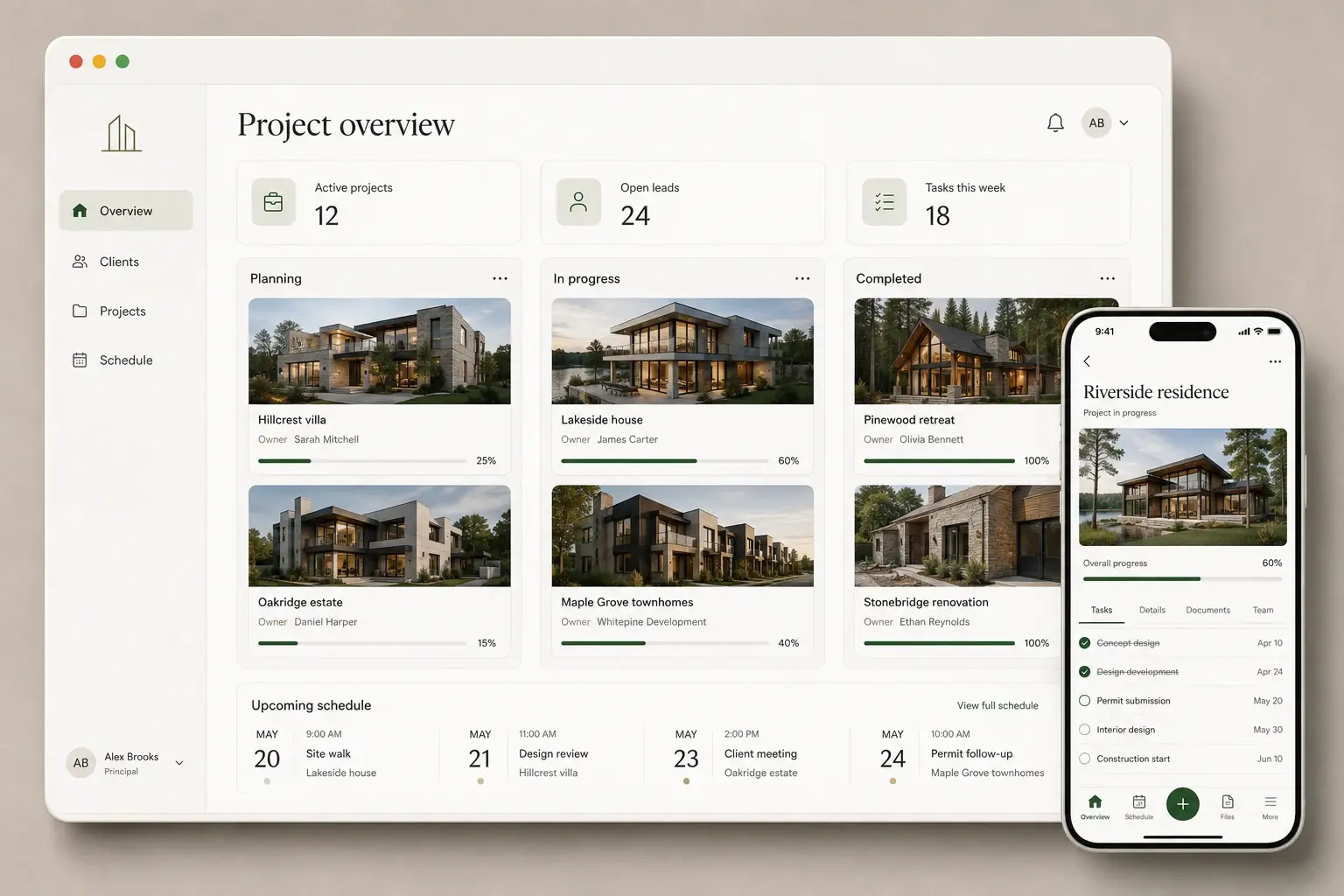
One workspace for client enquiries, project progress, and the next thing your team needs to do.
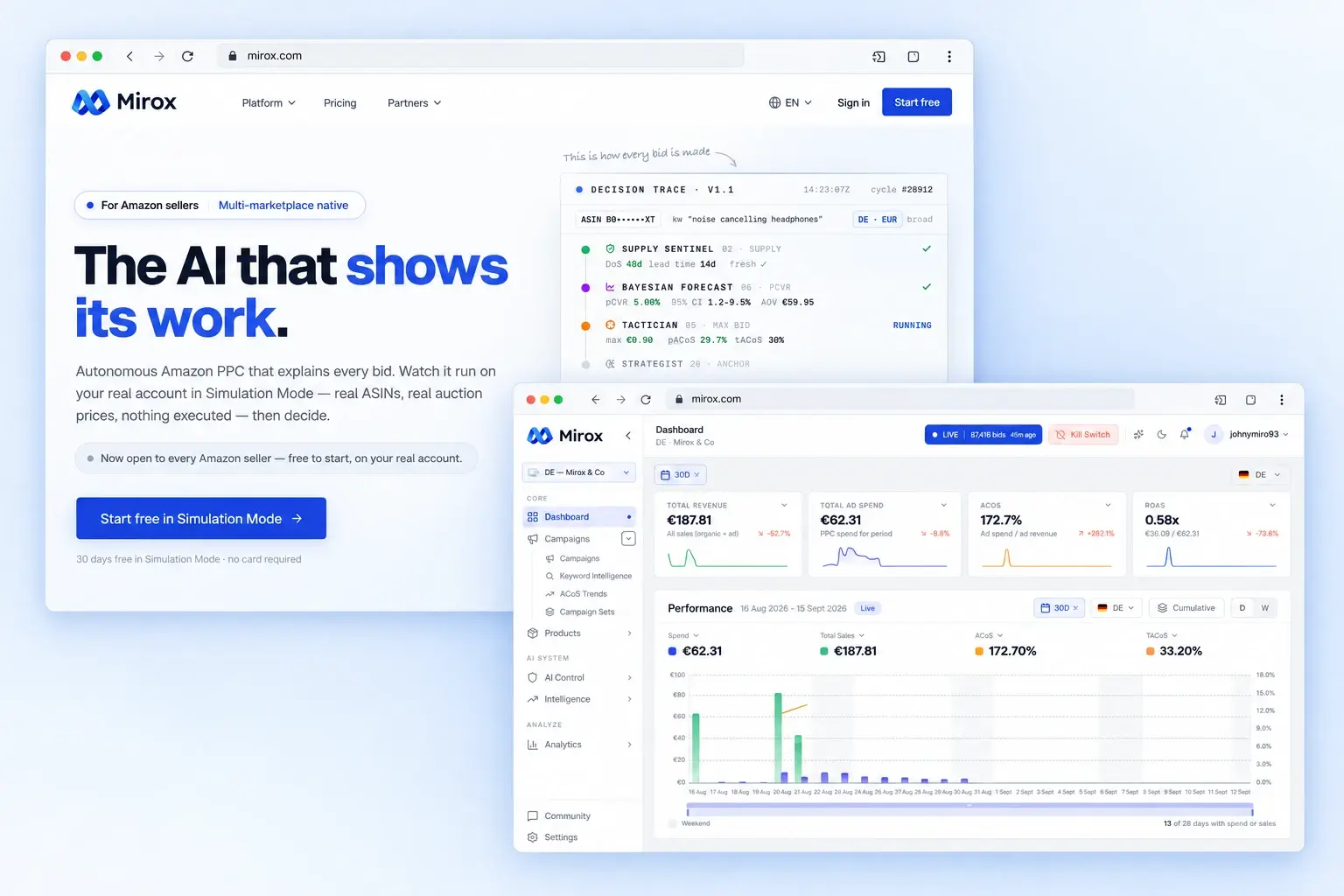
A platform that runs Amazon PPC advertising autonomously and explains every bid it makes with clear performance reports.
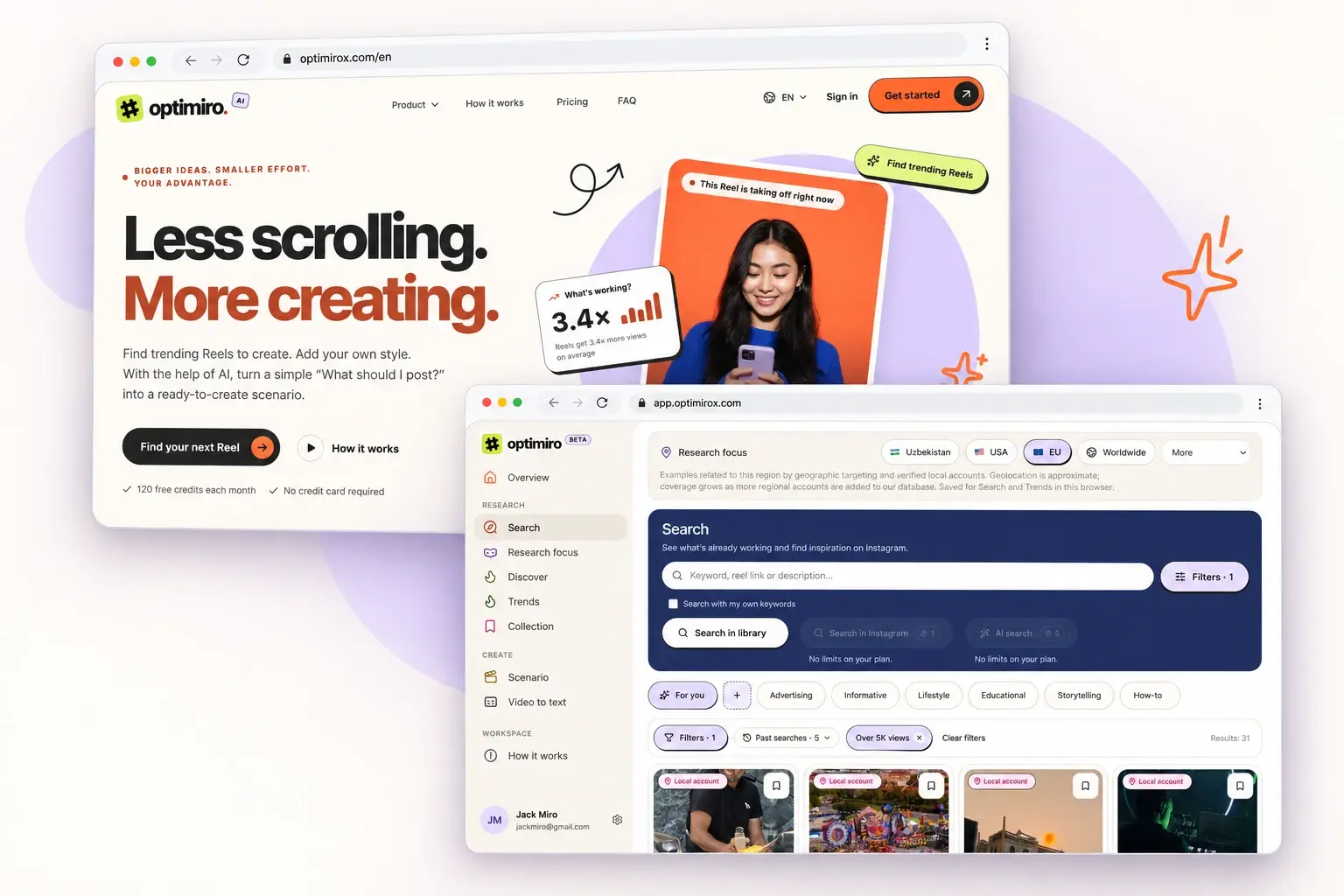
A website and dashboard for finding Reels, tracking trends and generating scripts with AI.
FAQ
Have another question?
If your process fits a ready-made CRM, use one — we will say so. Custom development makes sense when your workflow does not match a template, when you need deep integration with 1C or your own systems, or when licence costs per user are becoming a problem. We help you decide on the first call.
Yes. We sync clients, invoices, payments and stock with 1C through its API or exchange files, in whichever direction your accounting team needs. Payme, Click, Uzum and banking APIs are integrated the same way.
It depends on the number of processes and integrations. A first version covering one core process is typically a few months of work; after discovery you receive a written proposal with scope, milestones and a fixed price.
A first working version is usually in your team's hands within two to three months, with regular demos along the way. Further modules are added in short cycles.
Yes. Excel and Google Sheets, an old CRM or an accounting export are imported and cleaned as part of the launch, so the team starts with real data rather than an empty system.
On a cloud provider or on your own servers, including in Uzbekistan when data has to stay in the country. Backups, monitoring and updates are set up either way.
NEXT STEP
We will map it, propose a system around it and send a written scope with a price. NDA first, if you prefer.