Consumer apps on the App Store
Ordering, booking, membership and account apps with push notifications and payments.
IOS · APP STORE · SWIFT
iPhone and iPad apps built to Apple's standards: interfaces that follow the Human Interface Guidelines, App Store review passed without back-and-forth, and native Swift where the platform calls for it.
Part of our mobile apps: the shared approach, backend and process are described there. Read more
Mobile application concept: three phone screens showing daily appointments, a site inspection checklist, and a completed visit report.
iPhone users are a smaller share of the market in Uzbekistan, but they are often the customers a premium brand, a clinic or a financial product most wants to reach. We build iOS apps that feel at home on the platform and go through Apple's review with the privacy declarations, permissions and account setup handled properly.
The app is built in React Native with Swift modules where needed — Bluetooth, HealthKit, widgets, camera — and released through your own Apple Developer account, with TestFlight for testing before every release. The same codebase can serve Android as well.
Ordering, booking, membership and account apps with push notifications and payments.
Private distribution to your team through Apple Business Manager and TestFlight.
Core Bluetooth, HealthKit, widgets, Live Activities, camera and document scanning.
StoreKit in-app purchases and subscriptions, with server-side receipt validation.
Developer Program enrolment, privacy labels, App Tracking Transparency, screenshots and review.
Updates for each new iOS version and Apple policy change, so the app keeps its place on the store.
Loyalty, ordering and reservations for brands whose customers use iPhones.
Clinics, studios and apps that use HealthKit and reminders.
Secure apps with Face ID, device checks and local payments.
Appointments, memberships and payments in an app.
Companion apps for Bluetooth sensors and equipment.
Apps for markets where iPhone share is high, from our Lisbon office.
We map your business, your users, and the constraints around them, then agree exactly what the first release contains.
The data model, integrations, and interface decisions are made and written down before the build starts, so nothing is improvised later.
Focused development in short cycles, with working demos, code review, and tests as we go. You always see the current state.
Tested, documented, and deployed. The code, the accounts, and the knowledge move to your team, with support scoped to what you need.
Four layers, one path. Every product we build follows it — what changes between services is the technology at each stop, not the shape.
The screens your customers and your team work in. Rendered on the server so the first view arrives fast, and typed end to end so a change in the data cannot quietly break a page.
AROUND ALL FOUR
Automated tests run on every change, before it can reach your product.
One pipeline builds, checks, and deploys — the same way every time.
Logs, metrics, and alerts, so we see problems before your users report them.
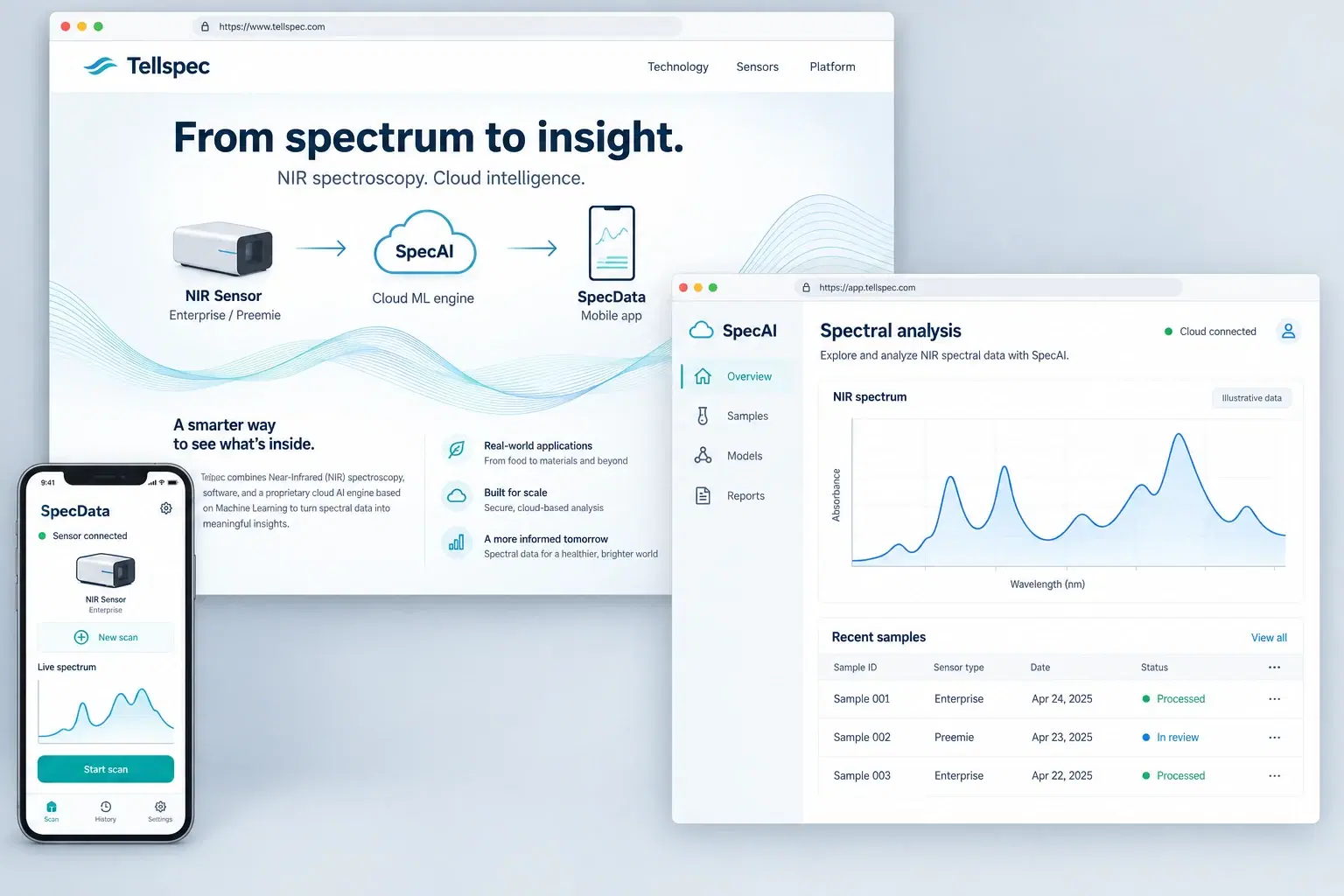
A mobile app that connects to a NIR spectroscopy sensor, sends readings to cloud AI for analysis, and shows results in real time.
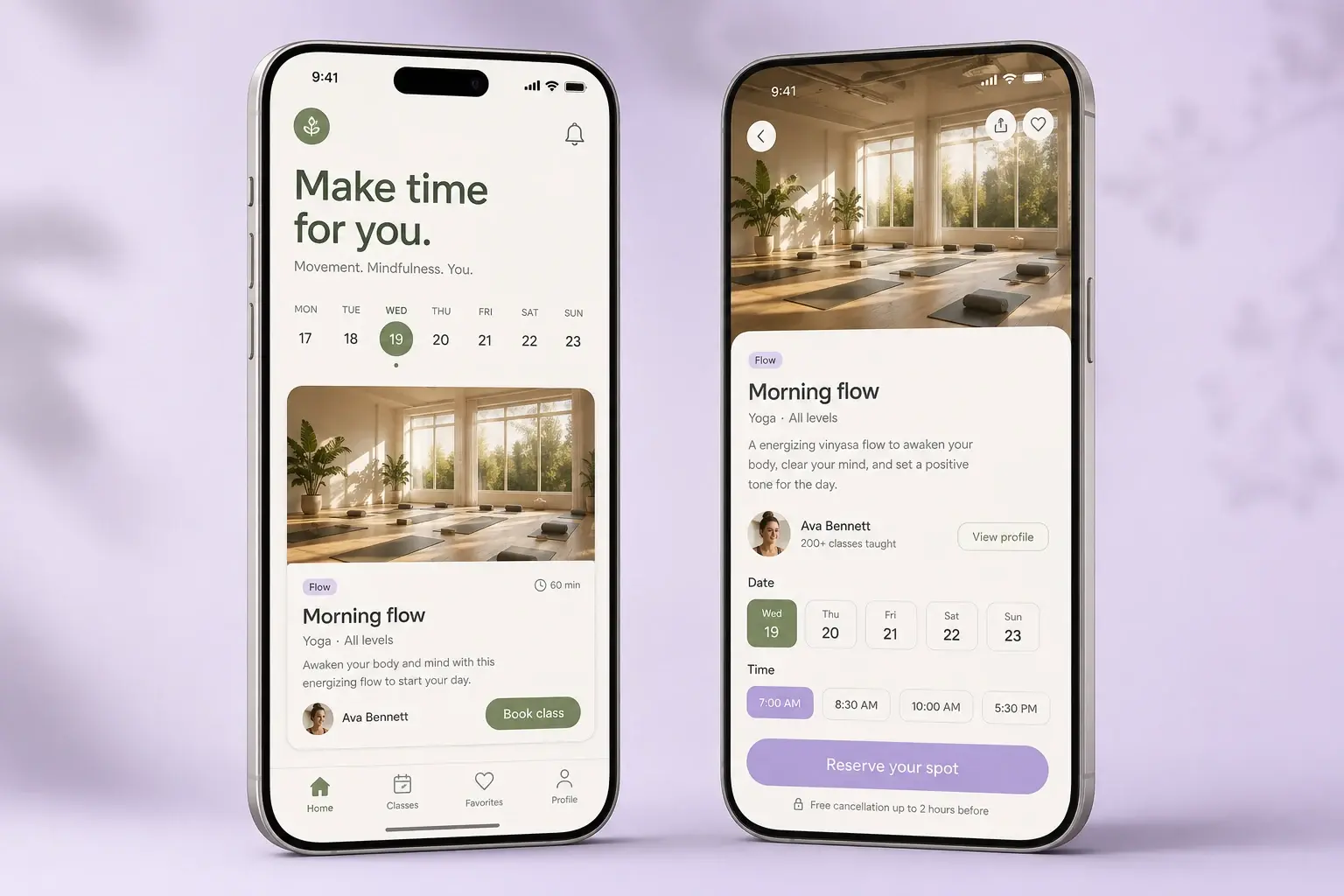
A booking app for studios and fitness centres: schedules, reservations and memberships in one place.
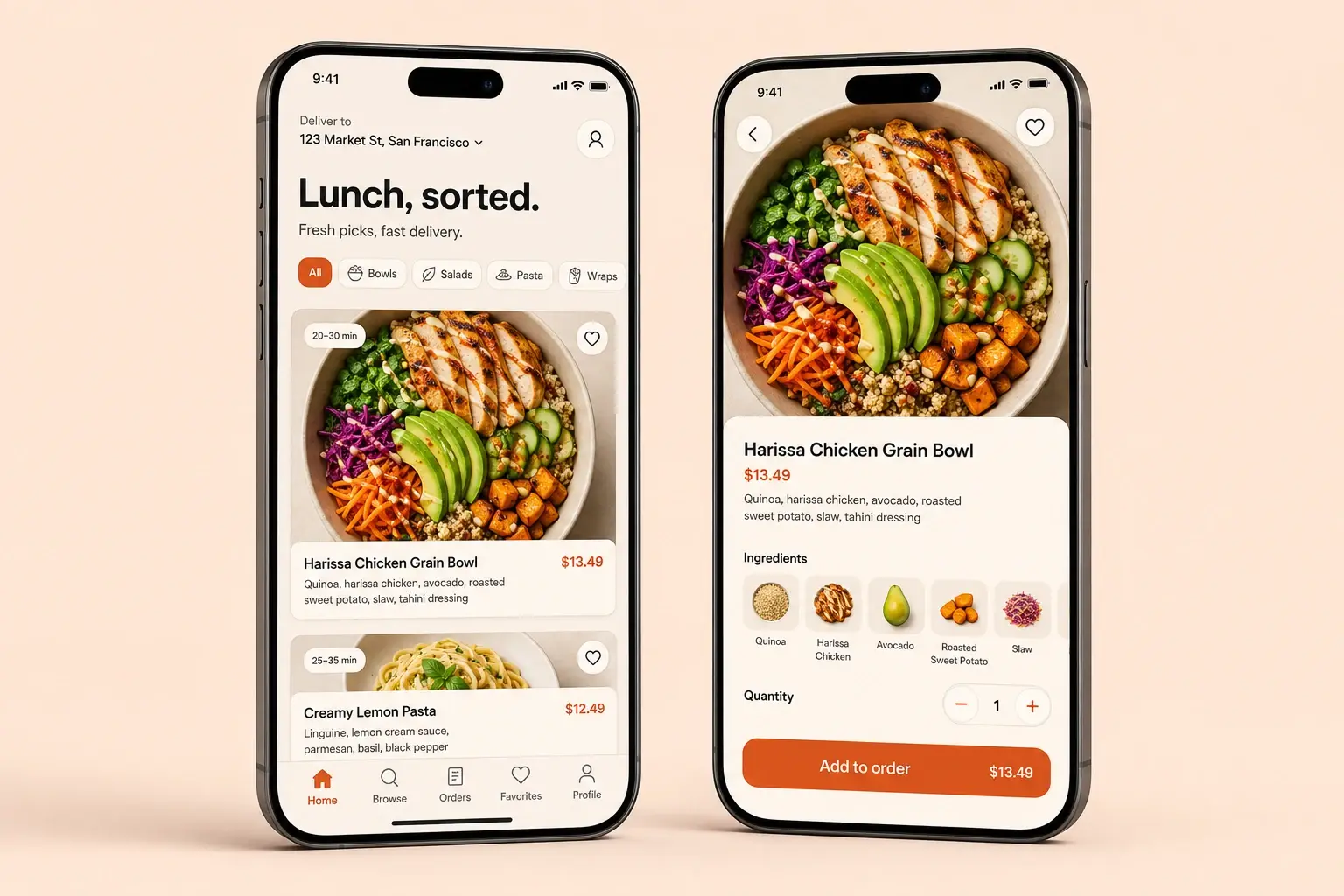
A delivery app that connects customers, restaurant teams and couriers, from the menu to order tracking.
FAQ
Have another question?
We build most iOS apps in React Native with Swift modules where a feature needs it; the interface still uses native components and follows Apple's guidelines. For apps built around platform features — heavy graphics, ARKit, complex widgets — a fully native Swift app is the better choice, and we will say so.
Yes, and we set it up with you: the Apple Developer Program is registered in your company's name (a D-U-N-S number is required), so the app, its reviews and its subscriptions belong to you.
First review typically takes one to three days once the app is submitted. We prepare privacy labels, permission texts and test accounts in advance, which is what usually avoids rejections.
Yes. The codebase is shared, so an Android release is a fraction of the cost of a second app. Our Android development page covers the platform specifics.
Yes. StoreKit purchases and subscriptions are implemented with server-side validation, and Apple's rules about what must go through in-app purchase are part of scoping.
A focused first release is a few months of work for a small senior team. After a discovery call you receive a written proposal with a fixed price and milestones.
NEXT STEP
We will propose the screens, the native features it needs and the App Store release plan, and send a fixed-price scope for the first version.