Customer apps
Ordering, booking, loyalty and account apps with push notifications and payments via Payme, Click and card.
MOBILE APPS · IOS · ANDROID
iOS and Android apps for your customers, field teams and staff — built from one React Native codebase, connected to your CRM, payments and back office, and published to the App Store and Google Play.
Mobile application concept: three phone screens showing daily appointments, a site inspection checklist, and a completed visit report.
A mobile app makes sense when your customers or your staff need you on a phone: ordering, booking, tracking, checklists, notifications. We build those apps for businesses in Uzbekistan and abroad, from the first screen to the store listing, and connect them to the systems you already run.
One codebase in React Native and Expo covers both platforms with native performance and a shared release process, so you maintain one product rather than two. Where a feature needs native code — Bluetooth sensors, background work, hardware — we write it in Kotlin or Swift.
Ordering, booking, loyalty and account apps with push notifications and payments via Payme, Click and card.
Visits, checklists, photos and signatures that work offline and sync when the connection returns.
A mobile face for your CRM or internal system: tasks, approvals, stock and reports on the go.
Apps that talk to sensors and hardware over Bluetooth, like the work done for Tellspec's spectral sensors.
The API, database, accounts and admin interface behind the app, built by the same team.
Developer accounts, listings, review, release pipelines and over-the-air updates for small fixes.
Each platform has its own page with the specifics: store publishing, native features, versions and payments.
Android apps for the phones your customers actually carry: fast on mid-range devices, published on Google Play, integrated with Uzbek payment providers, and maintained through every Android release.
IOS · APP STORE · SWIFTiPhone and iPad apps built to Apple's standards: interfaces that follow the Human Interface Guidelines, App Store review passed without back-and-forth, and native Swift where the platform calls for it.
Catalogue, basket, checkout and order tracking for customers; a courier app for the team.
Studios, clinics and salons taking appointments and payments in an app.
Inspections, deliveries and maintenance with GPS, photos and offline forms.
Lessons, homework and progress for students, with a teacher view.
Schedules, memberships and reminders that keep clients coming back.
Companion apps for sensors, meters and equipment.
We map your business, your users, and the constraints around them, then agree exactly what the first release contains.
The data model, integrations, and interface decisions are made and written down before the build starts, so nothing is improvised later.
Focused development in short cycles, with working demos, code review, and tests as we go. You always see the current state.
Tested, documented, and deployed. The code, the accounts, and the knowledge move to your team, with support scoped to what you need.
Four layers, one path. Every product we build follows it — what changes between services is the technology at each stop, not the shape.
The screens your customers and your team work in. Rendered on the server so the first view arrives fast, and typed end to end so a change in the data cannot quietly break a page.
AROUND ALL FOUR
Automated tests run on every change, before it can reach your product.
One pipeline builds, checks, and deploys — the same way every time.
Logs, metrics, and alerts, so we see problems before your users report them.
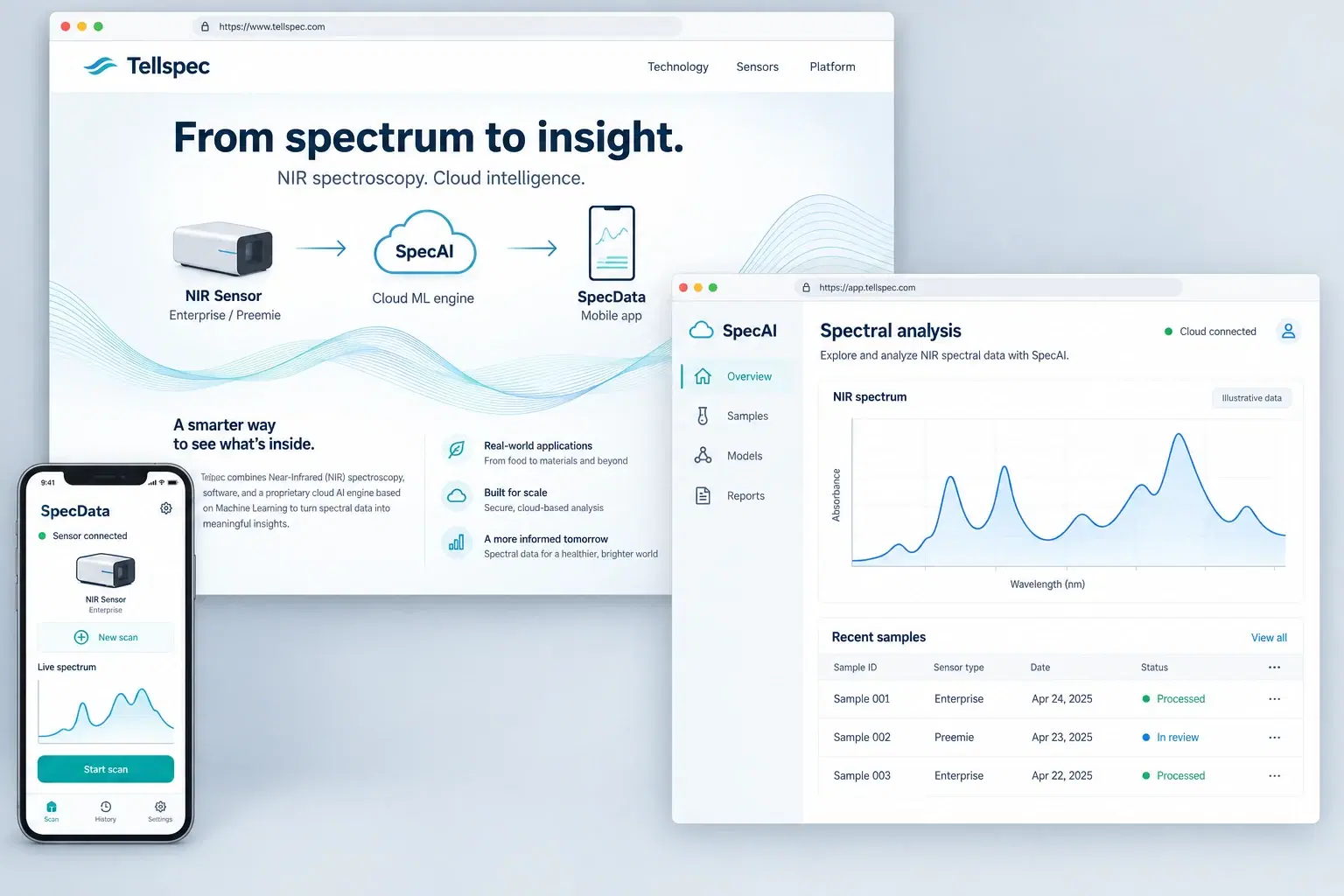
A mobile app that connects to a NIR spectroscopy sensor, sends readings to cloud AI for analysis, and shows results in real time.
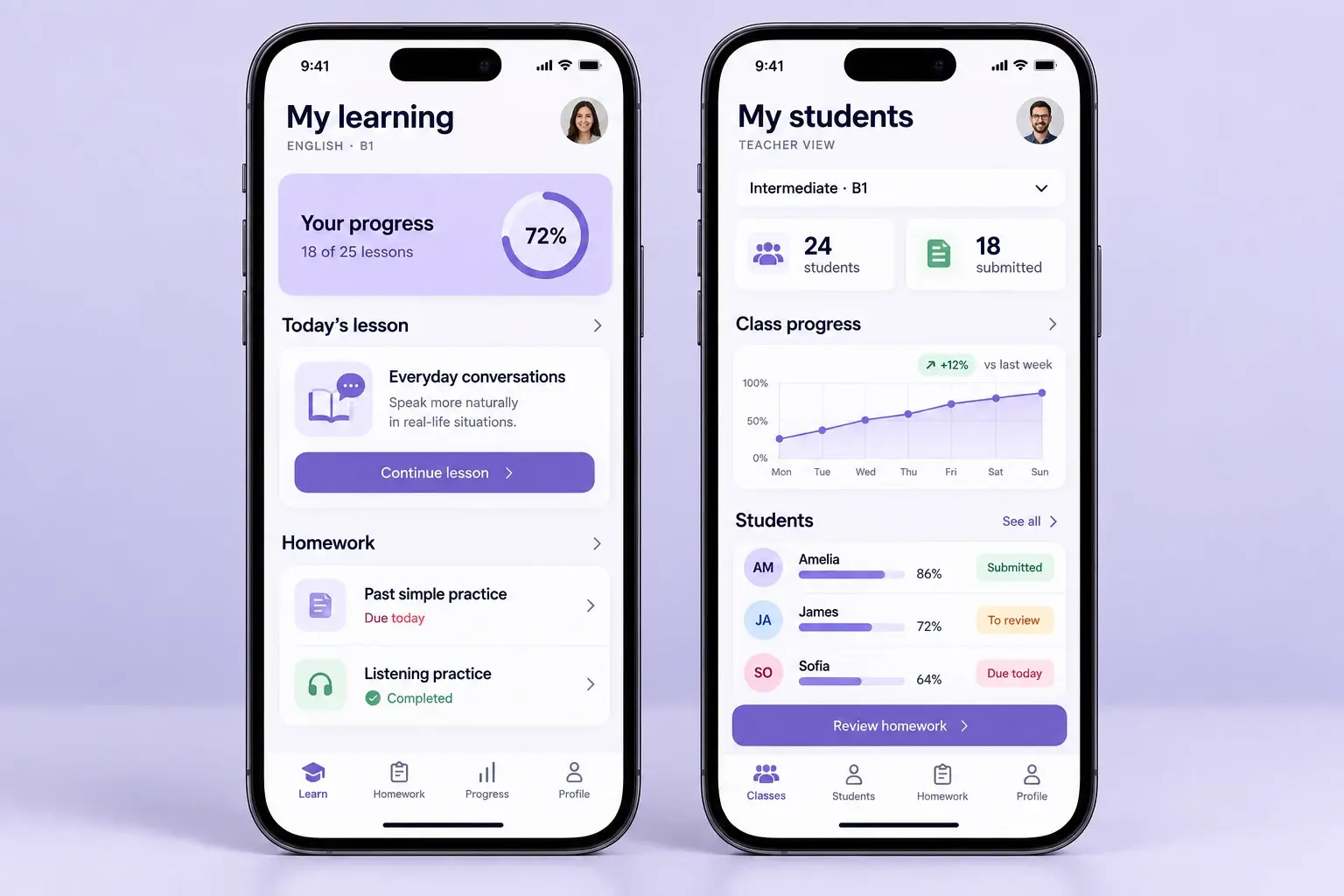
A mobile app for language centres that connects lessons, homework and student progress with the teachers guiding them.
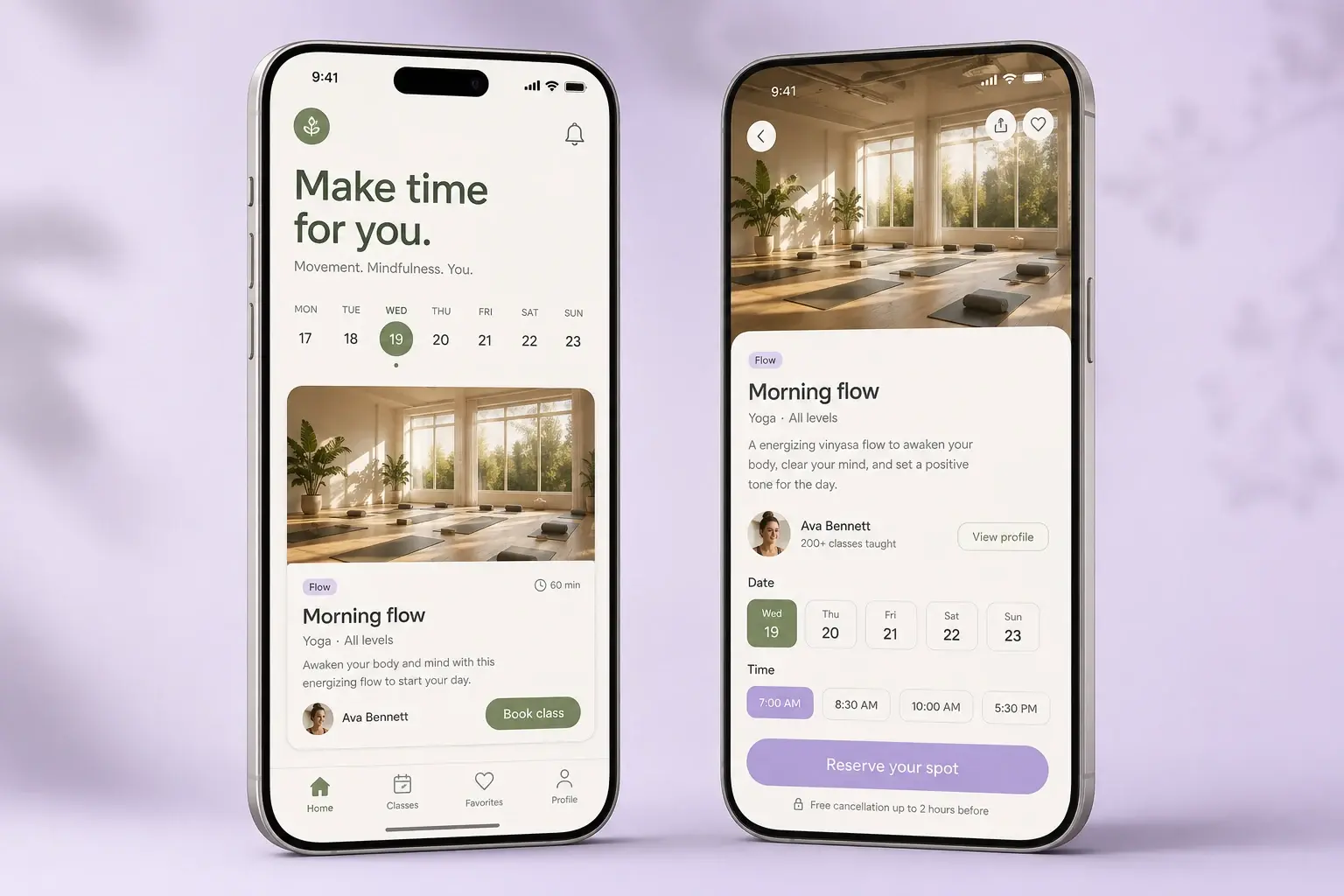
A booking app for studios and fitness centres: schedules, reservations and memberships in one place.
FAQ
Have another question?
For most business apps, React Native gives native performance at roughly half the cost of two separate native apps, and one team maintains it. We add native Kotlin or Swift code where a feature needs it. Fully native development is right for a small set of cases — heavy graphics, deep OS integration — and we will say so.
It depends on the screens, the integrations and whether a backend already exists. A focused first release is a few months of work for a small senior team; you receive a written proposal with a fixed price after discovery.
A first release typically reaches the stores within three to four months, including design, backend, testing and store review. Simpler apps are faster, and you see working builds throughout.
Yes. We set up the developer accounts in your company's name, prepare the listings and screenshots, handle review and manage releases afterwards.
Yes. Field and staff apps store data on the device and sync when the connection returns, which matters outside Tashkent and inside buildings.
Yes. The app talks to your systems through an API we build or extend: CRM, 1C, Payme, Click, Uzum, maps and messaging.
NEXT STEP
We will propose the screens, the platforms and the backend, and send a scope with a fixed price for the first release.